
5,0118 reviews
Book an appointment

Dermatology · Vascular laser · Sensitive skin

Rosacea & couperose visibly calmed.

Rosacea can cause redness, visible thread veins, burning and inflammatory papules at the same time. We treat each component in a targeted way – medically, with laser and with a routine that respects the skin barrier.

01 Inflammation & vessels treated separately02 Nd:YAG vascular laser03 Long-term control
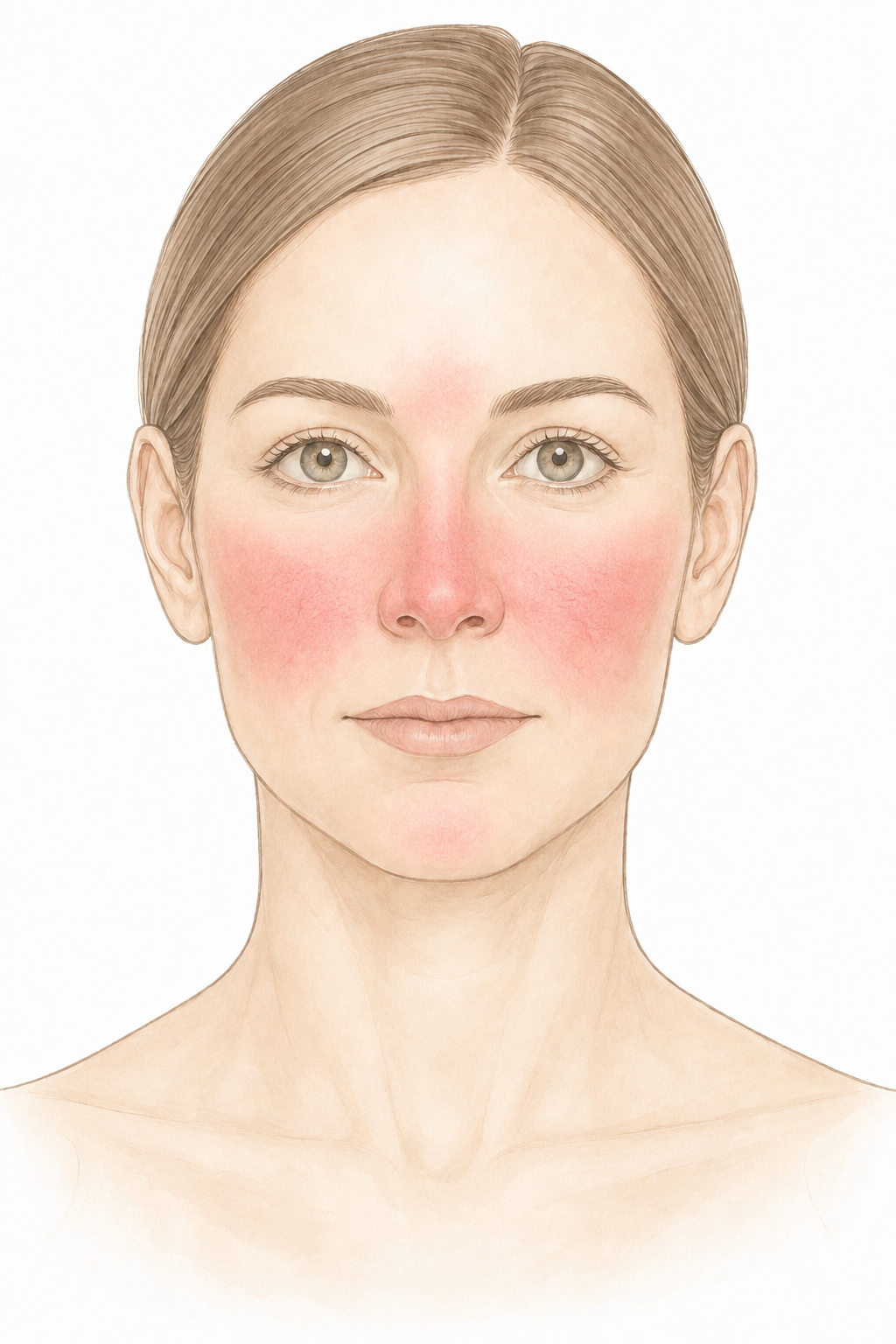
Schematic illustration of pronounced rosacea with clear redness on the cheeks and nose and slight involvement of the glabella and chinPronounced erythema
Typical appearance

Cheeks · Nose · Glabella · Chin

Schematic illustration – not a diagnosis

Understanding rosacea as a pattern

Vascular reaction, inflammation and the barrier influence each other.

Some patients mainly suffer from visible vessels, others from papules, burning or eye symptoms. The treatment plan is therefore built around the phenotype.

Sudden reddening

Flushing

Heat, alcohol, spicy food, exercise, stress or changes in temperature can trigger intense reddening. Not every trigger has to be avoided across the board – what matters is your personal pattern.

  • individual trigger profile
  • UV and overheating are often relevant
  • laser works on visible vessels rather than on every flush
Couperose and erythema

Vessel-dominated rosacea

Persistent redness and fine visible vessels can be reduced in the longer term with a vascular laser.

  • distinguish diffuse redness from individual vessels
  • settings according to vessel depth
  • several sessions are realistic
Papules and pustules

Inflammatory rosacea

Ivermectin, metronidazole, azelaic acid or anti-inflammatory-dose doxycycline can control inflammatory lesions. Comedones tend to indicate acne or a mixed form.

  • Demodex may be involved
  • anti-inflammatory rather than aggressively drying
  • maintenance against relapses
Burning, dryness, eyelids

Barrier & eyes

Rosacea skin often reacts sensitively to skincare. Dry, burning eyes or recurring inflammation of the eyelid margins can indicate ocular rosacea.

  • mild, barrier-friendly routine
  • actively ask about eye symptoms
  • involve an ophthalmologist if needed

Medical rosacea therapy

Calm the inflammation – treat the vessels separately.

Creams and tablets mainly act on inflammatory papules, pustules and partly the erythema. Vessels that are already dilated often need additional targeted laser treatment.

01

Antiparasitic and anti-inflammatory

Ivermectin

Topical ivermectin is particularly effective in papulopustular rosacea and, in addition to inflammation, also affects the Demodex population involved.

  • once-daily use possible
  • works over several weeks
  • plan maintenance individually
02

Proven topical options

Metronidazole & azelaic acid

Both agents can reduce inflammatory lesions. Azelaic acid also helps with post-inflammatory discolouration but can sting at first.

  • choose strength according to the barrier
  • introduce gradually
  • combine with mild skincare
03

Systemic anti-inflammatory

Doxycycline

Low-dose, i.e. anti-inflammatory-dose, doxycycline can help with marked inflammation without being intended solely as a classic antibiotic therapy.

  • time-limited or intermittent therapy
  • note sun sensitivity
  • not during pregnancy
04

For stubborn cases

Low-dose isotretinoin

For severe, treatment-resistant or phymatous rosacea, low-dose isotretinoin can be an effective off-label option – with the same strict pregnancy rules as for acne.

  • individual benefit-risk assessment
  • monitor blood tests and dryness
  • recurrence possible
05

Immediate visual effect, not healing

Neutralise redness

Green-tinted, non-irritating products and suitable mineral or chemical sun protection can reduce redness in everyday life immediately while the medical therapy takes effect.

  • no substitute for controlling inflammation
  • low in fragrance and barrier-friendly
  • keep the number of products small

Vascular laser for couperose and redness

Targeted heat for visible vessels.

In vascular treatment, haemoglobin absorbs the light energy. The vessel is heated in a controlled way and then broken down by the body. Superficial red vessels, diffuse redness and deeper bluish vessels each require adapted settings.

01

Nd:YAG 1064 nm

Penetrates deeper and can be useful for larger or deeper vessels; parameters are chosen particularly carefully.

Vascular laser · Treatment course

How the redness can gradually fade.

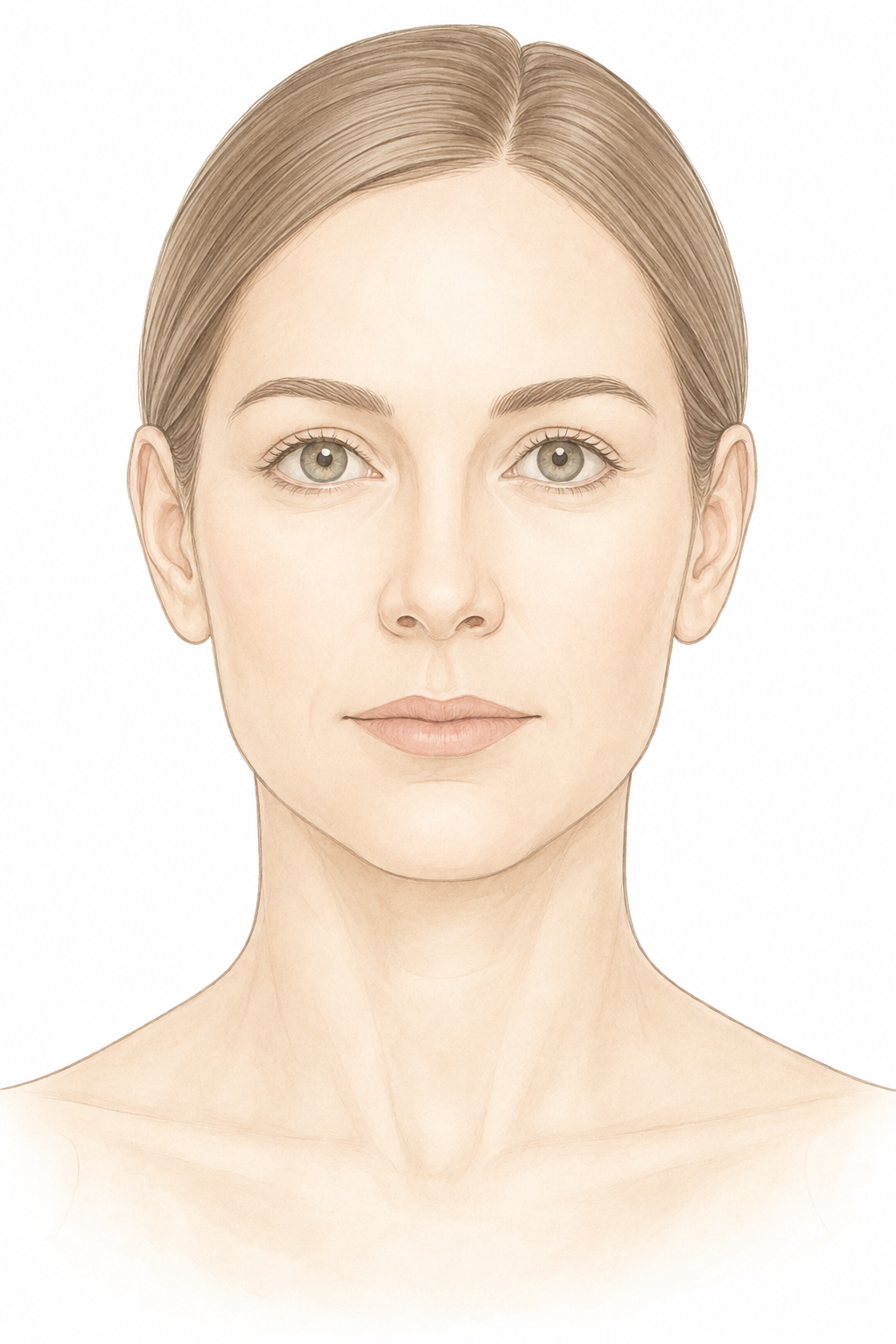
Drag the slider or select a treatment step. The face stays the same – only the simulated intensity of the redness is reduced.

Schematic initial findings of vessel-dominated rosaceaInitial findings0% less redness

Initial findings

Before treatment

The central erythema is visible mainly over the cheeks and nose, with slight involvement of the glabella and chin.

Your rosacea plan

Calm first. Then reduce the vessels precisely.

With strongly inflamed or irritated skin, we first stabilise the barrier and papules. Vascular treatment can then be carried out more safely and predictably.

  1. 01
    Analysis 01

    Record phenotypes and triggers

    We distinguish flushing, persistent erythema, visible vessels, papules, pustules, phyma and possible eye involvement. At the same time, we review your skincare and any previous cortisone treatment.

  2. 02
    Calm 02

    Stabilise inflammation and the barrier

    A short, well-tolerated routine and the right topical or systemic therapy reduce burning and inflammatory activity.

  3. 03
    Vessels 03

    Settings according to the vascular pattern

    Colour, diameter and depth of the vessels determine the settings of the Nd:YAG laser. A course of several sessions usually makes sense.

  4. 04
    Maintenance 04

    Catch relapses earlier

    Simple maintenance, consistent UV protection and occasional vascular check-ups keep the result more stable than repeated intensive restarts.

Skin barrier and triggers

Calm skin needs fewer stimuli.

After laser or during active-ingredient therapy, the skin is temporarily more sensitive. The routine is deliberately reduced and slowly expanded again.

01

Mild rather than maximally active

Low-fragrance cleansing and care; no brushes, harsh scrubs or constantly changing acids on inflamed rosacea skin.

02

Limit UV and heat

Broad-spectrum sun protection, shade and controlled cooling help more often than avoiding every single food.

03

Do not overheat after laser

Depending on the intensity, avoid saunas, very hot sports, strong sun and rubbing skincare for a few days. Cool only gently, not with ice directly on the skin.

04

Take your eyes seriously

Report dryness, a gritty feeling, sensitivity to light or recurring eyelid inflammation early and, if necessary, have them checked by an ophthalmologist.

Good to know

Frequently asked questions

Rosacea is chronic, but usually very well controllable. The best effect comes from treating inflammation, vessels and the skin barrier each with the method suited to it.

01Is couperose the same as rosacea?

Couperose mainly describes visible dilated vessels. These can be part of rosacea, but can also occur without clear inflammation. For the treatment plan we therefore also check for flushing, erythema, papules, pustules and eye symptoms.

02Can vascular laser cure rosacea?

Laser can considerably reduce existing vessels and persistent redness but does not eliminate the underlying predisposition. Controlling inflammation, UV protection and, if needed, later maintenance sessions remain sensible.

03How many laser sessions are needed?

That depends on the number and depth of vessels and on diffuse redness. A course with intervals of several weeks is usually planned; individual vessels can respond faster than diffuse erythema.

04Do I have to avoid all triggers strictly?

No. General lists are long and often lead to unnecessary restrictions. Watch for recurring personal triggers. UV, strong heat and facial creams containing cortisone are particularly often relevant.

05Why does even mild skincare sting?

Rosacea is often associated with a disturbed barrier and increased nerve sensitivity. We reduce the routine, treat the inflammation and choose a few low-irritant products instead of constantly testing new active ingredients.

06Can rosacea also affect the eyes?

Yes. Dry, burning or red eyes, inflammation of the eyelid margins and recurring styes can be signs of ocular rosacea. More severe symptoms need an assessment by an ophthalmologist as well.

SkinBerlin · Berlin-Schöneberg

Redness, vessels and inflammation each deserve their own solution.

Book a rosacea analysis. We combine medical therapy, barrier-friendly skincare and the right vascular technology into a long-term plan.